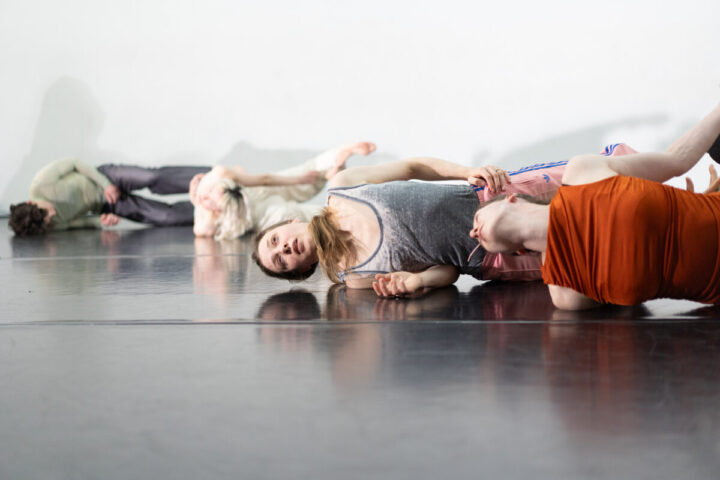
HOLD&RESIST_Spin-Off Version
Spin-Off Version im Rahmen von IMPULSTANZ Vienna International Dance Festival 2026
Premiere: 4. August 2026
2. Show: 6. August 2026
3. Show: 7 August 2026
mumok Wien
LIQUID LOFT zeigt beim diesjährigen ImPulsTanz Festival eine Spin-Off Version der Performance HOLD&RESIST_a springrite. Ursprünglich eine musikalische Kooperation mit der Metarockformation Radian für das Donaufestival Krems, löst sich die Performance vom Sound der Band und legt nun im Ausstellungskontext im mumok die künstlerische Idee in konzentrierter Form frei: reduziert, geschärft und auf ihre wesentlichen Kräfte gebündelt.
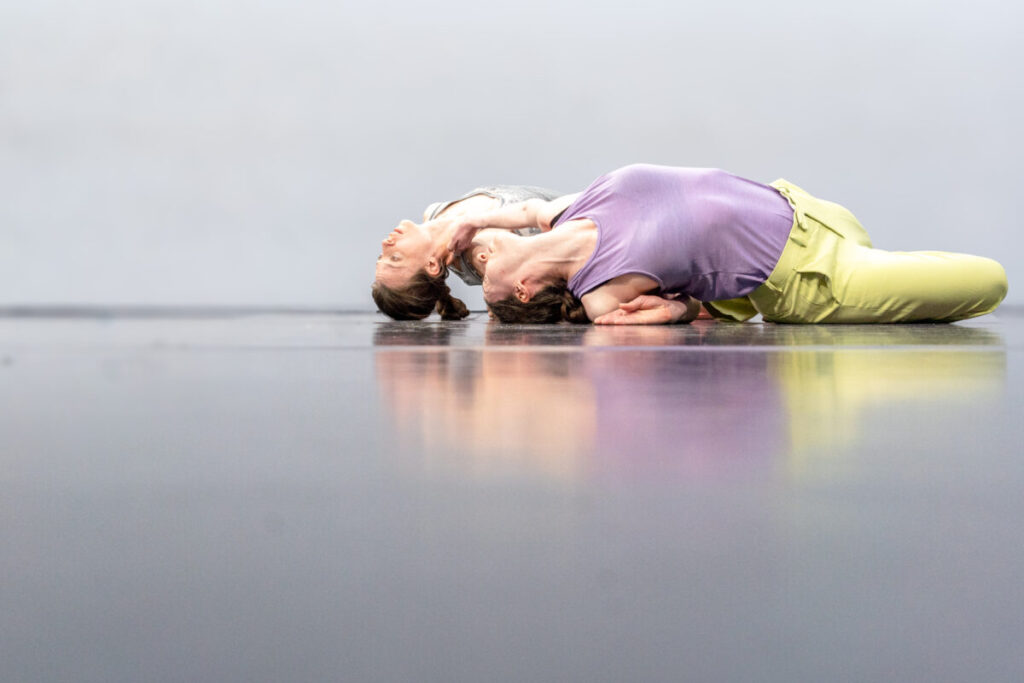
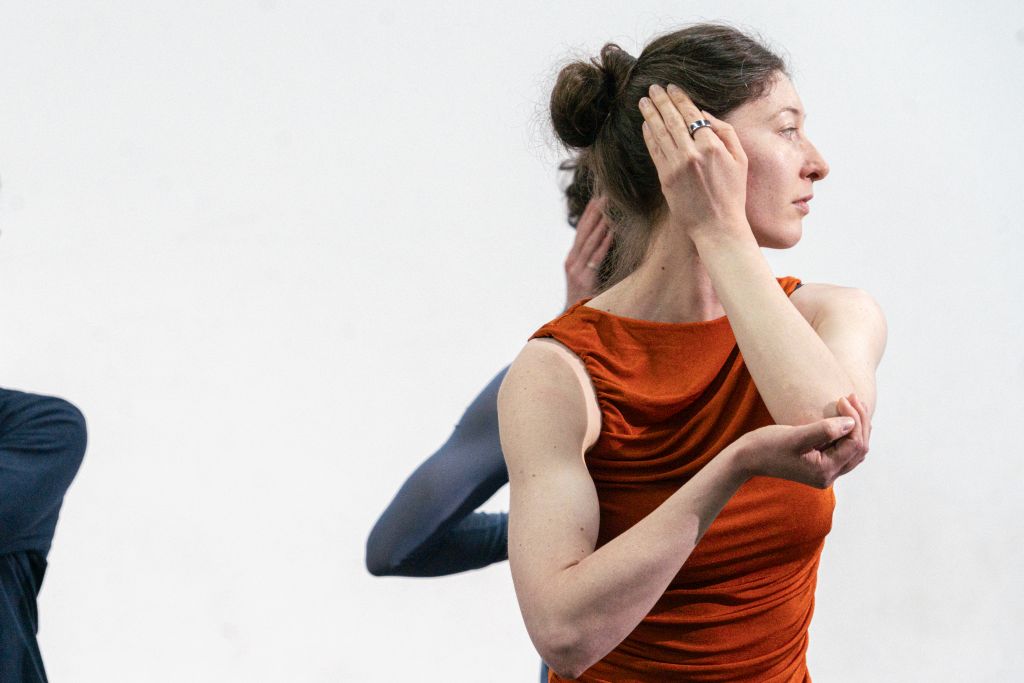
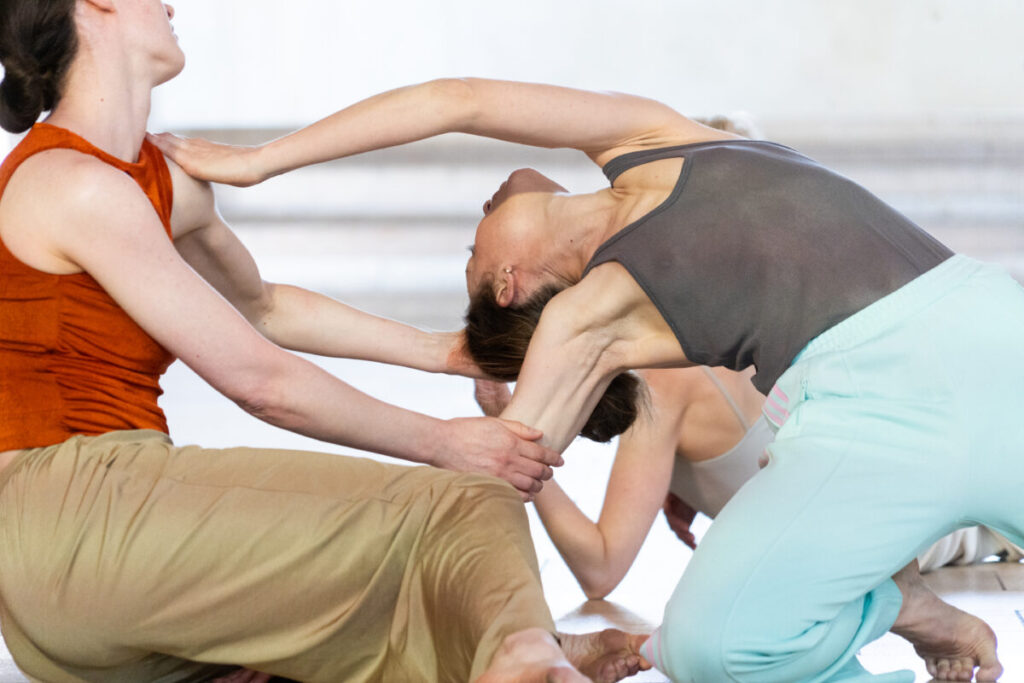
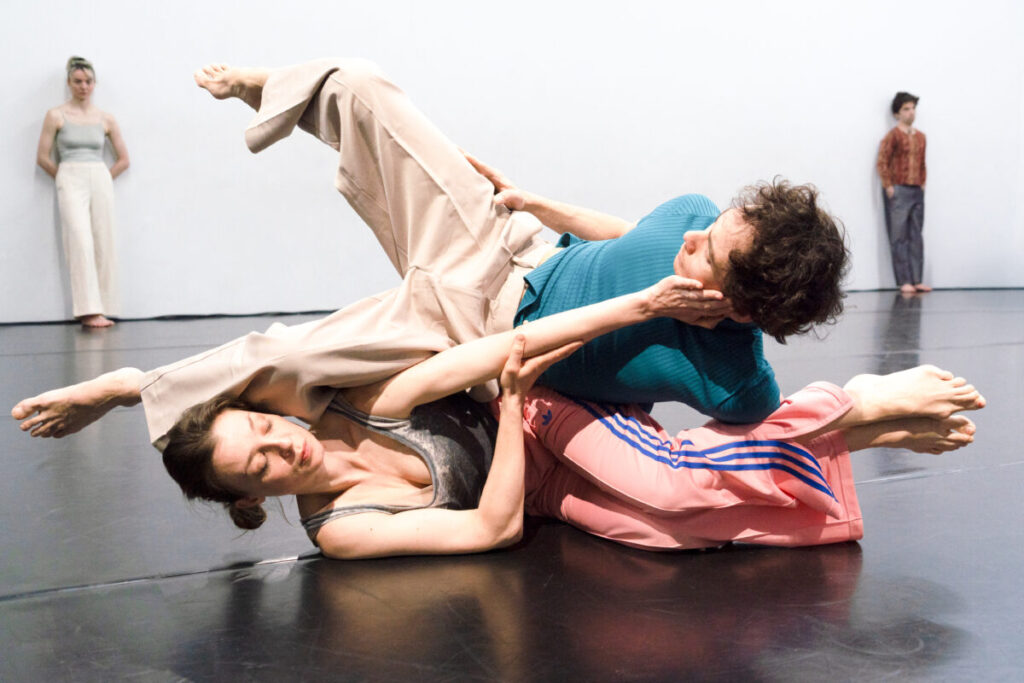
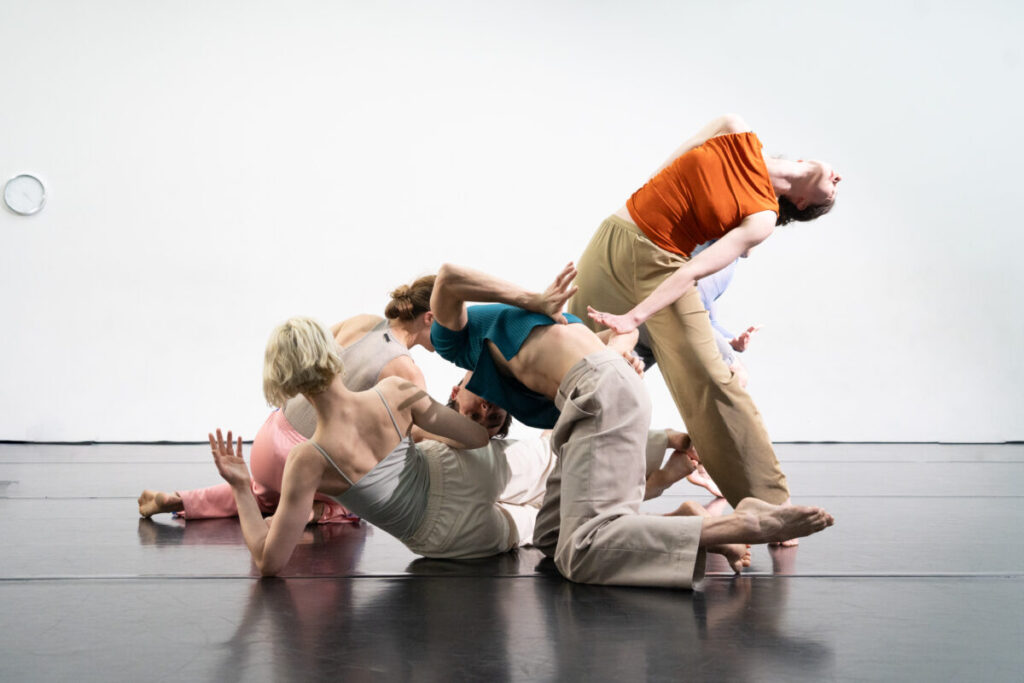
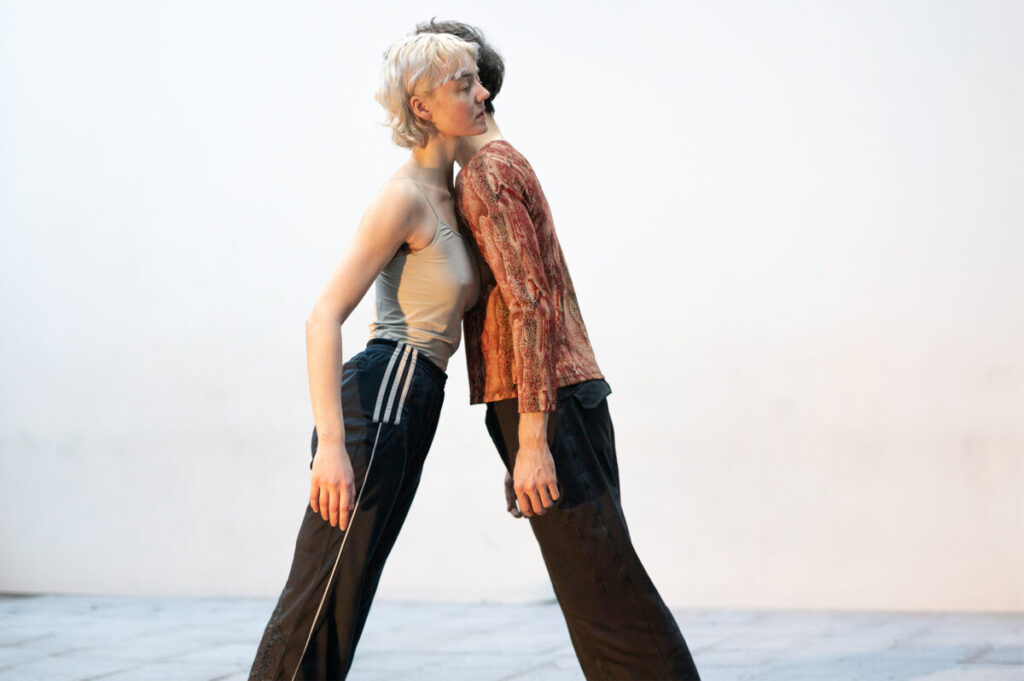
In dieser Spin Off Version entstehen die Klänge unmittelbar aus den Körpern selbst: Jedes Zittern, jeder Schritt, jedes Hold und Resist wird akustisch übersetzt und formt eine lebendige Soundlandschaft. So werden im Prozess des Haltens und Durchhaltens zugleich gesellschaftliche Bedingungen spürbar – Leistungsdruck, Erschöpfung, Kontrolle und die Notwendigkeit, Widerstand zu leisten. HOLD&RESIST untersucht den Körper in diesem Spannungsfeld und richtet den Blick auf die Schwerkraft als physische wie politische Kraft, gegen die der Wille Haltung und Kontrolle behaupten will. In gedehnten Bewegungen und gehaltenen Posen werden Grenzen ausgelotet, bis sich der Körper dem Zugriff entzieht und ein Eigenleben entwickelt. Das fragile Gleichgewicht zwischen Disziplin und Widerständigkeit, Anspannung und Nachlassen, Willenskraft und Resignation wird sichtbar.
ImPulsTanz Vienna International Dance Festival, AT
ImPulsTanz Vienna International Dance Festival, AT
ImPulsTanz Vienna International Dance Festival, AT
dates
Chris Haring, Künstlerische Leitung, Choreografie
Andreas Berger, Komposition, Electronics, Spatialisierung
Coralie Bénard, Tanz/ Choreografie
Jackson Carroll, Tanz/ Choreografie
Lavignac François-Eloi, Tanz/ Choreografie
Katharina Meves, Tanz/ Choreografie
Hannah Timbrell, Tanz/ Choreografie
Thomas Jelinek, Szenografie
Roman Harrer, Stage Management
Christina Panholzer, Company Management
Michael Loizenbauer, Foto/ Videodokumentation
Judith Thaler, Foto/ Dramaturgie
Valentina Diaz, Social Media
Stefan Röhrle, Kostüm
Mona Gablenz, Künstlerische Mitarbeit
Aldo Giannotti, Künstlerische Mitarbeit
credits
Hold and Resist Spin-Off Version, ImpulsTanz
Nadejda Komendantova
9. August 2026
Three months after its donaufestival premiere in the Kremser Dominikanerkirche, HOLD&RESIST has slipped out of its cathedral acoustics and taken up residence in the White Cube on Level -2 of mumok, where Chris Haring and Liquid Loft opened the Spin-Off Version on 4 August, with a second showing on 6 August. It is the company’s eleventh appearance at ImPulsTanz in mumok since 2015.
Gone is the Radian score that gave the Krems piece its wide, delicately swinging drone. In its place, Andreas Berger — co-founder of Liquid Loft alongside Haring, Stephanie Cumming and Thomas Jelinek — builds the soundworld live, from nothing but the amplified body: breath, tremor, the friction of skin on painted floor, the tiny report of a heel taking weight again. Coralie Bénard, Jackson Carroll, François-Eloi Lavignac, Katharina Meves and Hannah Timbrell inhabit Thomas Jelinek’s stripped scenography as five human seismographs.
The choreography is scarcely “dance” in any orthodox sense: it is a sequence of sculptural, sometimes torturously long holds punctured by micro-resistances — a shoulder rising against gravity’s dictate, a spine refusing to fold on schedule. Haring, who has spent two decades reading the body as cybernetic landscape and cyborg-theory subject, has arrived at something unexpectedly political. When does social pressure become bodily refusal, when does spirit reshape willingness into resistance and haul the exhausted body with it? In the mumok basement, with the audience close enough to hear each involuntary intake of breath, the question loses all abstraction.
Chris Haring/Liquid Loft: HOLD & RESIST
Shin Ha, The Preview: [Festival Review] ImPulsTanz 2026, The Fourth Story
20. August 2026
Chris Haring, the artistic director of the Vienna-based dance company Liquid Loft and co-director ofImpulstanz’s platform [8:tensions] for emerging artists with Breanna O’Mara, is an artist who unfolds a synesthetic ontology of the monistic body within a world enriched by multimedia art and soundscapes ( see The Preview, August 15, 2025, ‘Impulstanz 2025 , First Story‘). Now, he has entered the art museum to present a work of performativity that is distinctly different from performances in the art world .
Upon entering a space in the basement of Mumok, one side features tiered seating, while the remaining three sides are surrounded by floor seating. Silver steel plates are placed in the center of these four sides, and sixstand-type lights are positioned at the four corners, demarcating a condensed space for the performance . When the work begins, a total of five performers —two men and three women — enter the steel plates and form a single mass in their respective postures. The two standing individuals lift their heels and shift their weight onto the balls of their feet, while those on the floor either lift both feet with their weight resting on one shinbone or lean their bodies and heads back while supporting themselves with one arm and one leg; in any case, everyone assumes postures that deviate from everyday equilibrium.
Time passes in a single position. Reaching a breaking point, the dancers’ bodies begin to tremble. The faint ticking of the second hand begins to be heard, but the intervals feel increasingly long and distant. Tension fills the art gallery room, as if it were sealed off. For me, someone whose reactions to the body and space are somewhat sensitive and who occasionally suffers from panic attacks unable to withstand the pressure, it was a time akin to intricately designed torture (I endured and endured, genuinely hesitating whether to run out ). It is only after about five minutes that everyone is released, one after another. Only then does the tension that had been constricting my entire body release, and I can take a deep breath.
True to the concise titles ‘hold’ and ‘resist,’ which are akin to a razor-sharp incisor, the subsequent 40 minutes of the work consist of a continuous sequence of maintaining and enduring this posture, as well as resistance and disintegration. Although there are changes in the composition of the performers (non-performers sit or stand on the edge of the steel plate, taking a brief rest with expressionless faces) and variations in movement, this changing sculptural quality merely follows the progression of time and carries no particular representational or narrative significance. The essence of this work is to sustain and intensify the fleeting moments of bodily resistance and disintegration to the extreme, thereby transferring to the audience’s bodies the physical convulsions and mental pressure that emerge from them — or, conversely, the waves of momentary rest and freedom that are perceived only when that extreme tension is released.
“Deep dish”, the devices that aid in highlighting monistic bodily action are extremely simplified. All that remained were the reverberations of movement highlighted through microphones installed on the edges of the steel plates, the presence and faint sound of a wall clock that could be noticed through the gaze of a performer, and low-frequency sounds layered over certain passages. In that castrated world, what Chris Haring extruded is ‘corporeality‘ released at the apex of action and pause.
If “deep dish” , which expressed the existence of the body within an inflated world , was indicated in lowercase, this world, woven from the very workings of the body, is written in uppercase. He is indeed an ” ontologist of corporeality“. As I emerge from Chris Haring’s world, I see audience members of all ages scattered throughout the space outside the museum building, reflecting on “hold” and “resist” in their own unique poses. The progression of the sequences must have served as a metaphor for life. This memory of heightened senses will restore the ethicality of not only the close viewing of art but also all bodily relationships in daily life. Is this not one of the magnificent achievements of art?